When the Creed Became a Wall
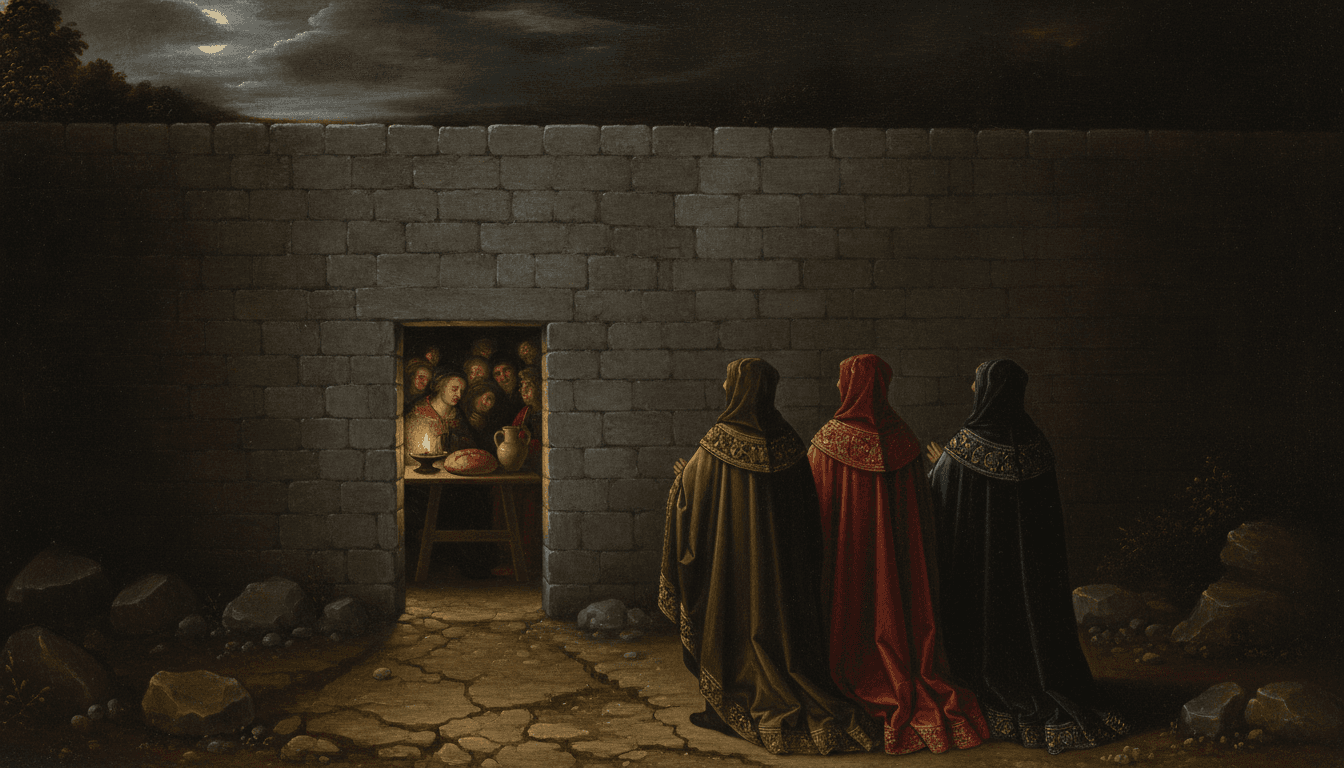
A creed was never supposed to be a wall. It was supposed to be a map. The difference between a map and a wall is the difference between an invitation and an exclusion.
April 6, 2026
A creed was never supposed to be a wall.
It was supposed to be a map. A way of describing the territory. A shared language for people who had encountered the same thing and were trying to communicate it to each other.
Maps are useful. Maps that tell you the territory is inaccessible are something else entirely.
What creeds were originally for
The earliest Christian confessions were simple.
"Jesus is Lord." Three words in Greek: Kyrios Iesous. That was the earliest creed. The foundational declaration of the community.
Simple enough that a child could say it. Politically charged enough that saying it in the Roman Empire was a statement of allegiance: my ultimate loyalty is not to Caesar.
It was a declaration of belonging. Not a fence around the community.
How the fence got built
By 325 AD the simple declaration had become a philosophical treatise.
The Nicene Creed uses technical Greek philosophical terminology. It makes claims about the inner nature of God that go far beyond anything Jesus himself said.
And it was used — within years of being written — to exclude, exile, and eventually persecute people who could not affirm every clause.
Arius of Alexandria was exiled. His books were burned. His followers were driven out.
Not for immoral behaviour. Not for failing to love their neighbours. For holding a different view of the Son's relationship to the Father.
The map had become a wall.
The gatekeeping pattern
This pattern did not end with Nicaea.
Jan Hus was burned at the stake in 1415 for reading scripture in the common tongue.
The Waldensians were declared heretics for living in voluntary poverty and reading the Bible in plain language.
Thousands of Anabaptists were drowned in the sixteenth century for insisting that baptism should be for believing adults.
In every case: people who were trying to follow Jesus were excluded — or killed — by the institution that bore his name for failing to hold the correct formula.
Jesus said his people would be known by how they loved one another.
The institution kept finding new ways to demonstrate that it knew who the right people were.
The wall today
The wall looks different now. Rarely violent. Rarely explicit.
But the pattern remains.
People are made to feel that their questions are dangerous. That their doubts disqualify them. That they need to resolve the theological uncertainties before they are welcome at the table.
The creed as wall looks like this: you must say the right words, hold the right positions, conform to the right categories, before you are permitted to follow.
Jesus never said that. He said: follow me. And let the road do the forming.
What a map looks like instead
A creed as map says: here is what we have found. Here is the terrain as we have experienced it.
Come and see if it matches what you find.
It invites rather than excludes. It describes rather than prescribes.
The earliest Christian confession was three words.
The Pioneer himself reduced the whole law to two commands.
Maybe the map was always supposed to be that simple.
Written by
Oliver T. Shepherd
Functional Faith — one question at a time.