The Name Above All Names: What We Call God and Why It Matters Less Than You Think
The debate over whether to say Yahweh or Jehovah has occupied scholars for centuries. But it rests on a misunderstanding of how names actually work — one that a linguist, a philosopher, and a traveller to Jordan could all correct.
August 31, 2026
There is a debate that has been running for centuries about what to call God.
Not which God. Not whether God exists. Not what God is like. Simply what to call him — what sounds to make with your mouth when you want to refer to the God of Abraham, the God of Moses, the God who spoke from the burning bush and said: I AM WHO I AM.
Yahweh, say the scholars. Jehovah, says the English tradition. Yahu or Yaho, says the evidence embedded in ancient proper names. Adonai, said the Jews who stopped pronouncing the name entirely.
The debate generates more heat than it deserves. This article explains why — and why this site uses Jehovah.
The four letters and the problem they created
In the Hebrew scriptures, God's personal name appears as four consonants: יהוה. Yod, He, Waw, He. Transliterated into English as YHWH and called the Tetragrammaton — from the Greek for four letters.
Hebrew, like most Semitic languages, was originally written without vowels. The reader supplied them from memory, context, and oral tradition. This was not unusual — it was simply how the written language worked.
The problem with YHWH is that the oral tradition that carried its pronunciation was deliberately broken.
During the Second Temple period — roughly the third to second centuries BCE — Jewish practice shifted. The name was considered too sacred to speak aloud. When a reader encountered YHWH in the text, they substituted Adonai, meaning My Lord. Over time this practice became so established that the original pronunciation was no longer passed on.
By the time the Masoretes — Jewish scholars working between roughly the sixth and tenth centuries CE — added vowel markings to the Hebrew text to preserve pronunciation, they faced a specific problem. They could not supply the vowels for YHWH because the vowels had been intentionally lost. So they did something technically ingenious and historically confusing: they added the vowel markings for Adonai to the consonants of YHWH. This was a reading instruction — say Adonai here — not a pronunciation guide for the name itself.
The result was a hybrid form: the consonants of YHWH with the vowels of Adonai, producing Yehowah.
How Jehovah was born
When Christian scholars in the medieval period encountered the Masoretic text, many were unaware of the reading convention. They saw Yehowah and read it as the name. Latin-speaking scholars then made a further transformation: Latin has no Y, so Y became I or J. Latin has no W, so W became V. The result was Jehovah — a name first appearing in written form in the sixteenth century, roughly 1,500 years after the original pronunciation had been lost.
Jehovah is in this sense a scholarly accident. It combines consonants from one word with vowels from another, filtered through a Latin alphabet that lacked the necessary sounds. The consensus among scholars is that the historical vocalization of the Tetragrammaton at the time of the redaction of the Torah is most likely Yahweh. The derived forms Iehouah and Jehovah first appeared in the sixteenth century.
It is not wrong in the way a lie is wrong. It is imprecise in the way a copy of a copy of a map is imprecise. The general shape is there. The referent is clear. But the original is not preserved in it.
The case for Yahweh
The scholarly reconstruction of Yahweh begins with Wilhelm Gesenius, the nineteenth century German Hebrew scholar whose lexicon remains foundational to the field.
In his Hebrew Dictionary, Gesenius supports Yahweh because of the Samaritan pronunciation Ιαβε reported by Theodoret, and because the theophoric name prefixes YHW and YH can be explained from the form Yahweh. Gesenius' proposal to read YHWH as יַהְוֶה is accepted as the best scholarly reconstructed vocalised Hebrew spelling of the tetragrammaton.
Theodoret was a fifth century Christian theologian who recorded that the Samaritans — who maintained an unbroken oral tradition separate from mainstream Judaism — pronounced the name as Iabe. Greek has no Y, no H between vowels, and no W, so Iabe is a Greek approximation of what Greek speakers heard when Samaritans said the name. Working back through those phonological substitutions gives something close to Yahweh.
The early Christian writers Epiphanius and Clement of Alexandria also give forms that scholars have interpreted as supporting a Yahweh pronunciation.
Based on all this evidence, we can be quite confident that the name YHWH was pronounced Yahweh in antiquity and its shortened form YHW was pronounced either Yaho or Yahu, depending on whether you take the Greek transcriptions or the Masoretic Text's vowel points as more authoritative.
The Yahweh reconstruction is the current scholarly consensus. It appears in academic publications, modern Bible translations that discuss the issue, and most theological dictionaries. But it is a reconstruction — not a preserved pronunciation.
The case from theophoric names
There is a second line of evidence that is less theoretical and more concrete: the names of people.
Hebrew proper names frequently incorporate the divine name as an element. These are called theophoric names — names that carry a reference to God within them. Unlike the isolated Tetragrammaton, these names were spoken aloud every day for generations. They were not subject to the same prohibition on pronunciation. They were simply people's names.
The earliest testimony as to the original pronunciation of the name comes from the Assyrian pronunciation of the Hebrew in such proper names as Hezekiah, which is so given as to represent yahu.
Look at the biblical names that carry the divine element:
- Elijah — El-i-yahu — my God is Yahu
- Isaiah — Yesha-yahu — salvation of Yahu
- Jeremiah — Yirme-yahu — Yahu will raise up
- Nehemiah — Nehem-yahu — comfort of Yahu
- Netanyahu — Netan-yahu — gift of Yahu
Every one of these names preserves the short form of the divine name as Yahu. Not Yahweh. Not Jehovah. Yahu.
Every one of these names preserves the short form of the divine name as Yahu. Not Yah-weh. Not Je-ho-vah. Yahu — with the characteristic open vowels of the Semitic language family and none of the consonantal ending that Yahweh requires.
This matters. These names were not theological reconstructions by nineteenth century German scholars. They were spoken aloud by Aramaic and Hebrew speakers in the ancient Near East, in precisely the linguistic and cultural environment where the name originated. The sounds felt native to those mouths because they were.
The short form also appears in everyday language that has survived into the modern world: Hallelu-Yah — praise Yah. The Yah of Hallelujah is the divine name in its shortest form, preserved in a word used by Christians and Jews around the world every week. It points directly at the Yahu embedded in those ancient names.
A traveller's observation
There is something a traveller to Jordan notices that the scholars in their libraries sometimes miss.
The sounds of Semitic language — Arabic, Aramaic, Hebrew — share a phonological family. Strong consonants, open vowels, sounds that sit naturally in the throat and the mouth of someone who grew up speaking in that landscape.
The "ah" and "oh" sounds of Yahu or Yaho sit naturally in that family. They feel like the sounds of the region. The "way" ending of Yahweh — a specific vocalisation of the waw consonant that requires the mouth to shape a W sound in a particular way — feels less native. Not impossible, but less organic.
This is not a formal scholarly argument. It is a phonological intuition grounded in proximity to the living sounds of the language family. And it aligns, as it turns out, with the theophoric name evidence. The short form Yahu, which Semitic speakers naturally produced, was probably closer to what the divine name actually sounded like than the Yahweh reconstruction that emerged from a European scholar's analysis of ancient texts.
What names actually do
Here is where the debate has been conducted on false premises.
Every discussion of YHWH's correct pronunciation assumes that getting the phonology right is what makes the name valid. That there is one correct sequence of sounds, and all others are in some sense wrong or insufficient or disrespectful to the one being named.
This assumption misunderstands how proper names work.
The philosopher Saul Kripke, in his landmark 1980 work Naming and Necessity, argued that proper names function as what he called rigid designators. A rigid designator refers to the same individual in every possible world — not by describing that individual's properties, but by directly pointing at them. The name does not mean a set of descriptions. It identifies a specific person, and it goes on identifying that person regardless of how the descriptions around them might change.
The implication for pronunciation is significant. A name does not need to be phonologically identical across languages to refer to the same person. It needs to carry the same pointing function — to be directed at the same individual — and it does this through a chain of use that goes back to an original naming event, what Kripke calls the initial baptism.
Consider what happens to a single name as it crosses linguistic borders. The Hebrew Yochanan — meaning Yahweh is gracious — becomes:
| Language | Form | Sounds like |
|---|---|---|
| Hebrew | Yochanan | Yo-kha-nan |
| Arabic | Yahya | Yah-ya |
| Greek | Ioannes | Ee-oh-an-nes |
| Latin | Iohannes | Yo-han-nes |
| English | John | Jon |
| Spanish | Juan | Hwan |
| French | Jean | Zhon |
| Italian | Giovanni | Jo-van-ee |
| Russian | Ivan | Ee-van |
| Welsh | Evan | Ev-an |
| Irish | Seán | Shawn |
Every one of these is the same name. John and Yahya and Ivan and Juan and Giovanni are all the same name wearing different phonological clothes. Juan is of Hebrew origin and has the meaning God has been gracious. The chain runs from Yochanan through two thousand years of linguistic evolution across dozens of languages and cultures.
A man named Yahya in Jordan knows that the English name John refers to the same name as his. A woman named Siobhan in Ireland knows that Giovanna in Italy carries the same name she does. The referent is stable. The phonology varies enormously. The names do their job regardless.
No one argues that English speakers who say John are calling on a different person from Arabic speakers who say Yahya. The name points. The person is identified. The phonological surface is secondary to the referential function.
Applied to the name of God
If this is how names work for human beings — and there is no serious dispute that it is — then it is how names work for the name of God.
When a Jewish scholar in the Second Temple period said Adonai while reading YHWH, he was not calling on a different God. He was preserving the referential function of the name through a substitution the entire community understood.
When a medieval Latin reader said Iehovah, he was not mispronouncing his way to a different deity. He was pointing at the same person with imprecise sounds.
When a nineteenth century German scholar reconstructed Yahweh from Samaritan and patristic evidence, he was not discovering the secret password that finally activated the name. He was producing a more phonologically accurate approximation of the original sounds — which is valuable scholarship — while pointing at the same person.
When an English Christian says Jehovah and an Arabic Muslim says Allah and a Hebrew speaker says Elohim, they are all using different words to point at what they understand to be the same ultimate reality. The debate is not about who they are pointing at. The debate is about whether their descriptions match.
The name of God functions as a rigid designator. It points. It has been pointing at the same person since Moses at the burning bush. It goes on pointing regardless of the phonological clothing it wears in any particular language.
Why the pronunciation was lost and what that tells us
The deliberate suppression of the name's pronunciation is itself theologically significant.
The Jewish tradition that stopped saying the name was not motivated by carelessness. It was motivated by reverence so extreme that it preferred to lose the pronunciation rather than risk profaning the name. The result — a name whose original sounds we no longer possess with certainty — is paradoxically a monument to the intensity with which the name was held.
The God whose name was considered too sacred to speak became the God whose name's pronunciation is now uncertain. The reverence that intended to honour the name ended up obscuring it.
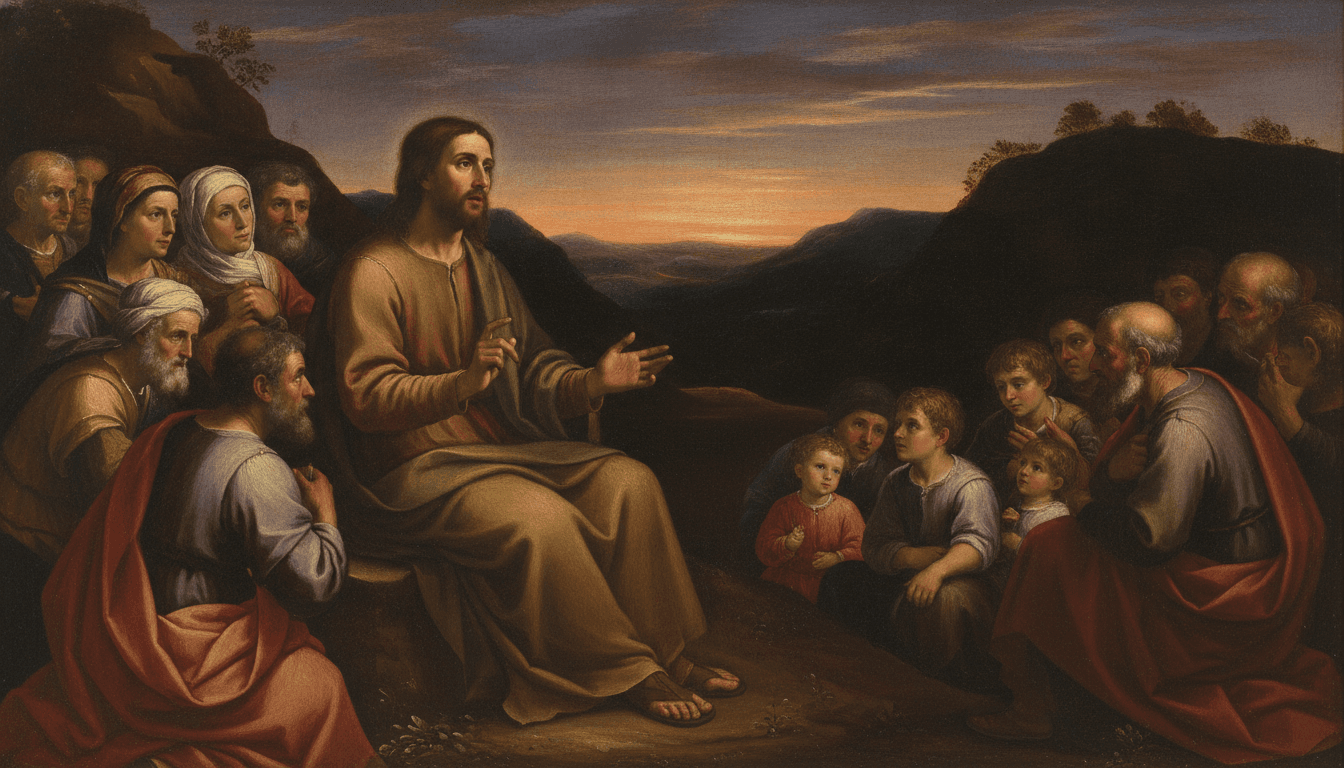
There is something the Pioneer himself said that is relevant here. He reduced the complexity of the law to two commands: love God and love your neighbour. He said his Father seeks worshippers who worship in spirit and in truth. He said nothing about phonological precision.
The God who described himself as I AM WHO I AM — the self-existent one, the one whose existence is the ground of all other existence — is not waiting for the correct pronunciation before he responds. He is waiting for the orientation of the will. The turning of the person toward him.
A name is not a formula to be pronounced correctly. It is a pointer to a person. And the person it points to has never been unclear.
Why this site uses Jehovah
This site uses Jehovah as the English form of the divine name for straightforward reasons.
It is the established English form with a four hundred year history in the English-speaking world. The King James Bible, published in 1611, uses Jehovah in four places — Exodus 6:3, Psalm 83:18, Isaiah 12:2, and Isaiah 26:4. English hymns, English theology, and English liturgy have used it for centuries. English speakers who encounter it understand immediately who is being referenced.
It is also, as the etymological chain demonstrates, closer to the ancient form than many people realise. Jehovah derives from Yehowah, which combines the consonants of YHWH with Masoretic vowel pointing. The consonantal skeleton is the Tetragrammaton itself. And the name chain from YHWH to Yahu to Yaho to Yahovah to Yehowah to Jehovah is — as we have seen — a more direct phonological lineage than the nineteenth century scholarly reconstruction of Yahweh, which rests heavily on Greek phonological evidence filtered through ancient writers who were working with a language that lacked several of the relevant sounds.
This site also uses YHWH where the text specifically calls for the Tetragrammaton itself to be visible — on scripture pages where the Hebrew interlinear displays the four letters in their original form, and in discussions of the name's etymology.
The pronunciation debate in honest summary
The honest position, held with appropriate humility, is this:
The original pronunciation of YHWH was most likely in the Yahu or Yahweh range — the scholarly evidence points in that direction. The exact phonology cannot be recovered with certainty because it was deliberately lost. The sixteenth century form Jehovah is an imprecise historical accident that has become the established English form through four centuries of consistent use.
All three — Yahweh, Yahu, Jehovah — are pointing at the same person. That person is the Father: the One God, unbegotten, uncreated, the ground of all existence, who spoke to Moses from a burning bush and said I AM WHO I AM. Who revealed his character through the Hebrew scriptures. Who sent the Pioneer to hold that character in a human life and demonstrate what it looks like to walk the Way.
The name is a pointer. The person it points to is the subject of this entire site.
Call him what your tradition and your language equip you to call him. He will know who you mean.
A final word on the name itself
There is something in the name YHWH that no pronunciation controversy can obscure.
The name derives from the Hebrew root hayah — to be. To exist. The name encodes existence itself. I AM WHO I AM is the response to Moses's question, and it is not an evasion — it is the most precise description possible. The name means: the one who exists of himself. The one whose existence depends on nothing outside himself. The self-existent one.
Every other name for God is a description — Most High, Almighty, Lord, Father. YHWH alone is not a description. It is an identification of the mode of existence that belongs to this particular person alone.
Whether you say it Yahu or Yahweh or Jehovah — you are pointing at the one whose existence is the ground of all other existence.
That is who the Pioneer called Father. That is who said: follow my Pioneer and you will find the Way.
The name does its job. Whatever sounds you make when you say it.
Written by
Oliver T. Shepherd
Functional Faith — one question at a time.