Costly Love: What the Wooden Pole Actually Asked of Him
There is a difference between sacrifice and costly love. Sacrifice is ritual. Costly love gives what it cannot afford to lose. The wooden pole was the second thing.
June 29, 2026
There is a difference between sacrifice and costly love.
Sacrifice is ritual. It is the prescribed offering made to satisfy a divine requirement. It follows a formula. It can be performed without personal cost.
Costly love is different.
Costly love gives what it cannot afford to lose.
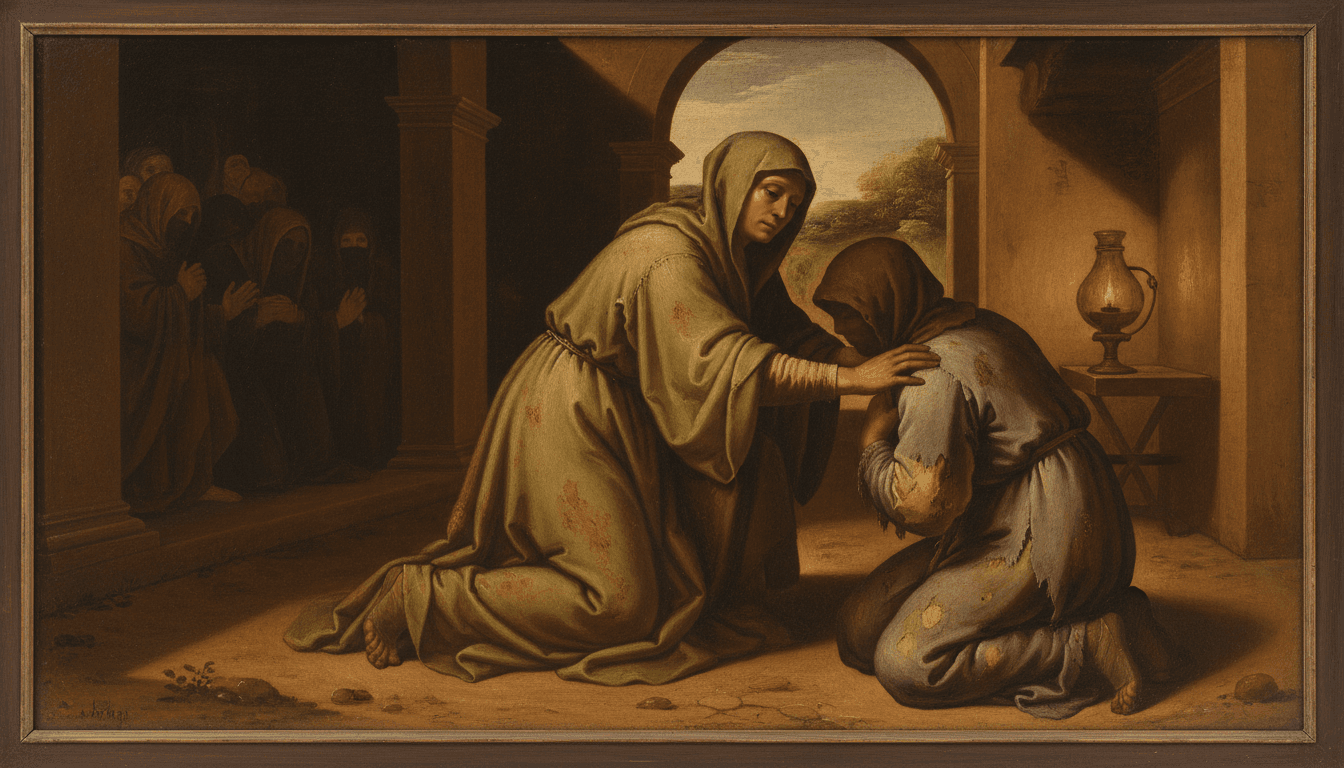
It is the widow's two coins rather than the Pharisee's tithe. It is the father running — undignified, unconditional — before the speech is finished. It is the woman breaking the alabaster jar and pouring everything she had over his feet.
It is not calculated. It is not proportional. It does not ask first whether the recipient deserves it.
It simply gives. Completely. At full cost to the giver.
What the wooden pole was
The execution of Jesus was not a ritual sacrifice.
It was not a formula being satisfied. It was not a cosmic accounting transaction.
It was a man who had spent three years demonstrating costly love — who had crossed every boundary, healed every outcast, welcomed every excluded person, confronted every institution that was blocking the door — being executed by the combined power of the religious and political establishment he had spent those three years disrupting.
And refusing to stop being who he was, even under that pressure.
He could have called the angels. He said so himself — twelve legions of them were available. He had the means of escape. He chose not to use them.
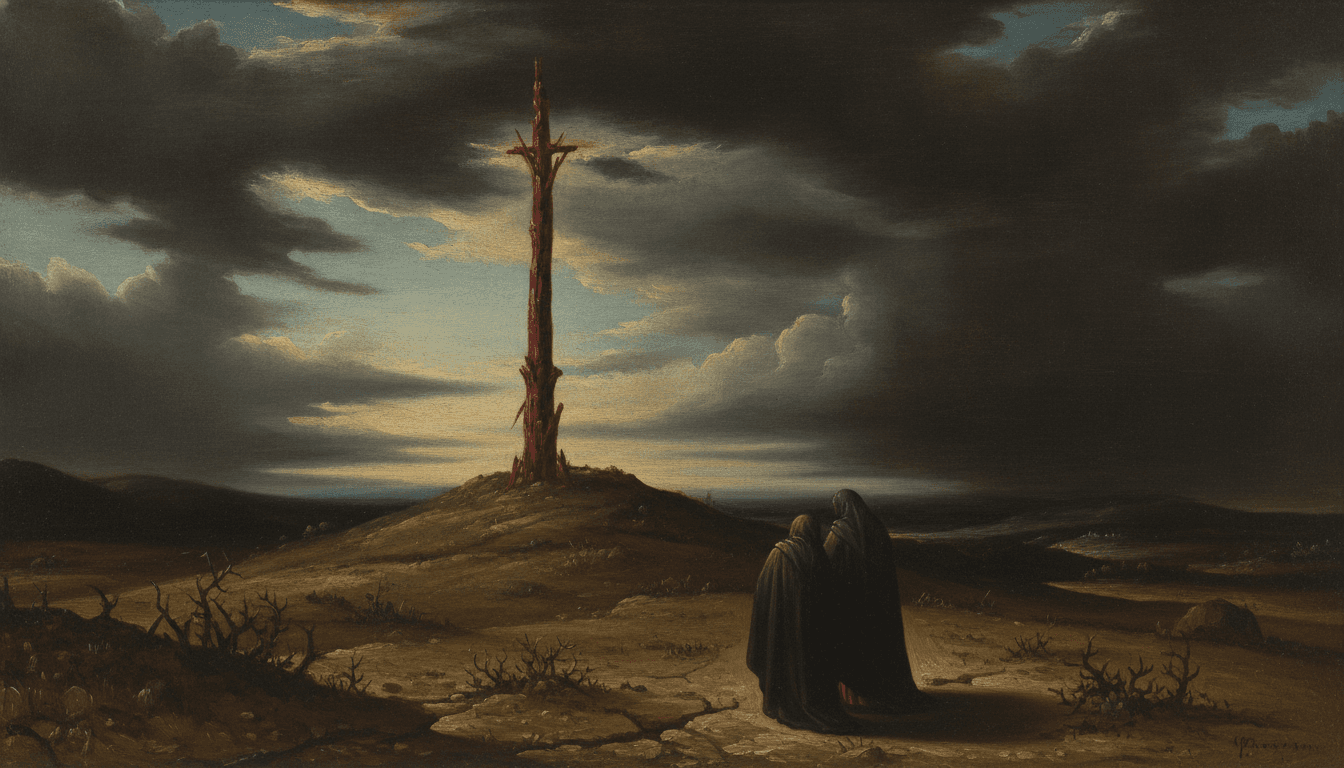
He stayed on the wood.
He held the shape of the Father's character — mercy, justice, faithful love — under the maximum possible pressure. And he did not break.
That is costly love. Not ritual. Not formula. The choice to keep being who you are when who you are is costing you everything.
The crimson worm
There is a creature in the Hebrew scriptures that most people have never heard of.
Psalm 22 — the psalm Jesus quoted from the wooden pole — says "I am a worm." (Psalm 22:6)
The Hebrew word is tola'ath. It is not the ordinary word for worm. It refers to the crimson worm — the same creature the Old Testament calls scarlet, the source of the dye that coloured the tabernacle curtains and the High Priest's garments.
The tola'ath climbs a tree. She fixes herself to the wood so completely she cannot come back down alive. She gives birth beneath her body, and her children feed on her. When she dies, her body secretes a crimson fluid that permanently stains the wood.
She climbs. She fixes herself. She does not come down. Her children live because she stays.
The psalmist said: I am this creature.
Jesus quoted that psalm from a wooden pole outside Jerusalem.
The wood was stained with the colour of what he gave. His children live because he stayed.
What costly love demands of us
He did not go through this so that we could observe it safely from a distance.
He went through it as the Pioneer — the one who goes first, who demonstrates the path, who commissions everyone who follows to walk the same road.
The commission is specific: as the Father sent me, I am sending you. (John 20:21)
What does that look like?
It looks like the conversation you do not have to have but choose to have because someone needs the truth from someone who loves them.
It looks like the forgiveness that costs you the right to be right.
It looks like the resource given to meet a need you did not create and are not responsible for.
It looks like the enemy prayed for. Actually. Not as a spiritual exercise but as the genuine desire for good things for someone who has not desired good things for you.
None of this is safe. All of it is costly.
That is the practice. He demonstrated it fully. He commissioned us to do it after him.
The wood was stained because he stayed. What are you willing to stay on?
For the Greek behind the wooden pole — read this →
Written by
Oliver T. Shepherd
Functional Faith — one question at a time.